Aansluit- en montageonderdelen
Bekijk de productgroepen voor je installatie. De juiste uitvoering hangt af van je paneel en installatie.
Alle aansluit- en montageonderdelen →Hulp bij een compleet systeem? Vergelijk de systemen of bekijk persoonlijk advies.


Faraday Energy
Faraday Energy Glass 225Wp PERC S3
Faraday Energy Glass 225Wp PERC S3
Couldn't load pickup availability
Direct verzendbaar of meestal binnen 24 uur af te halen.
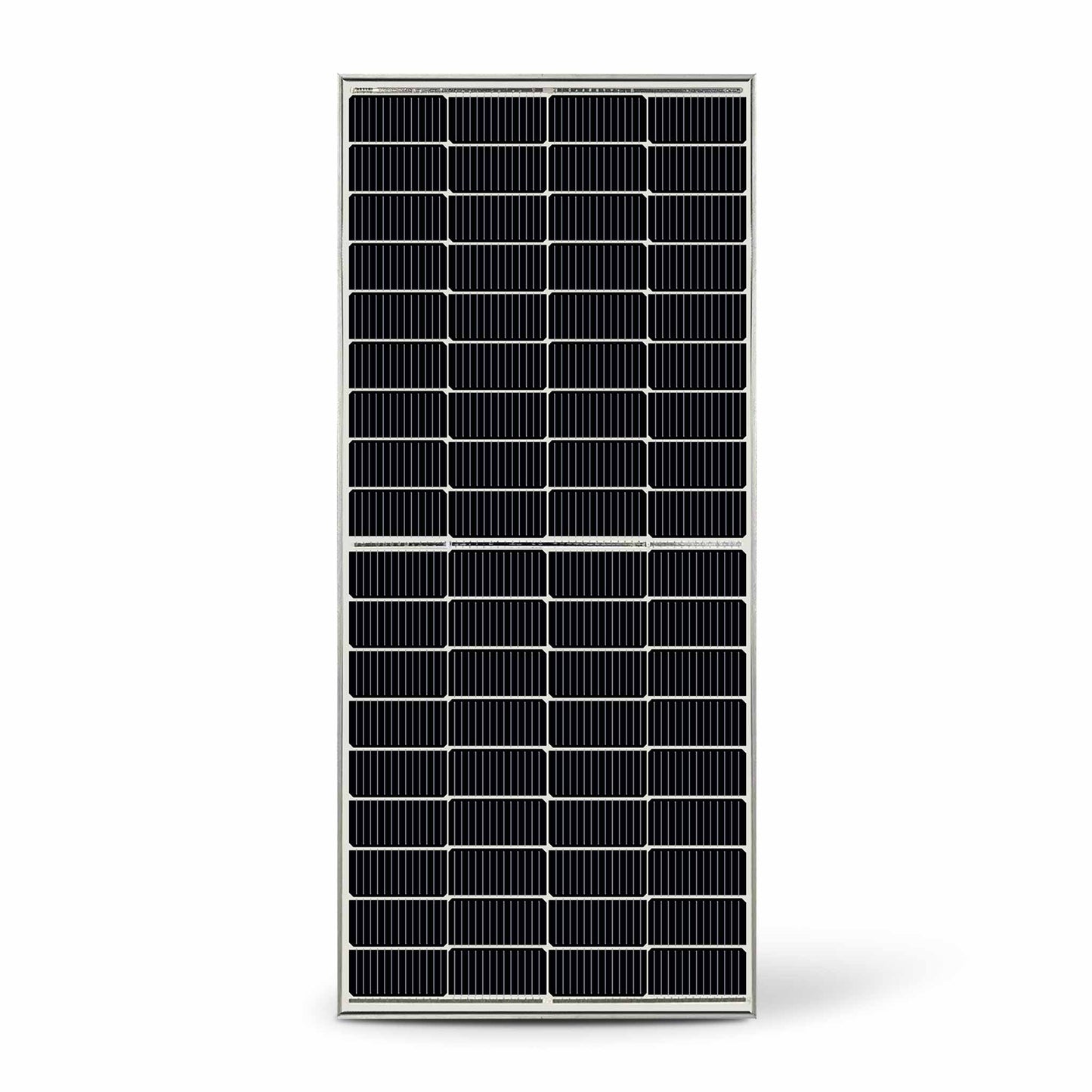
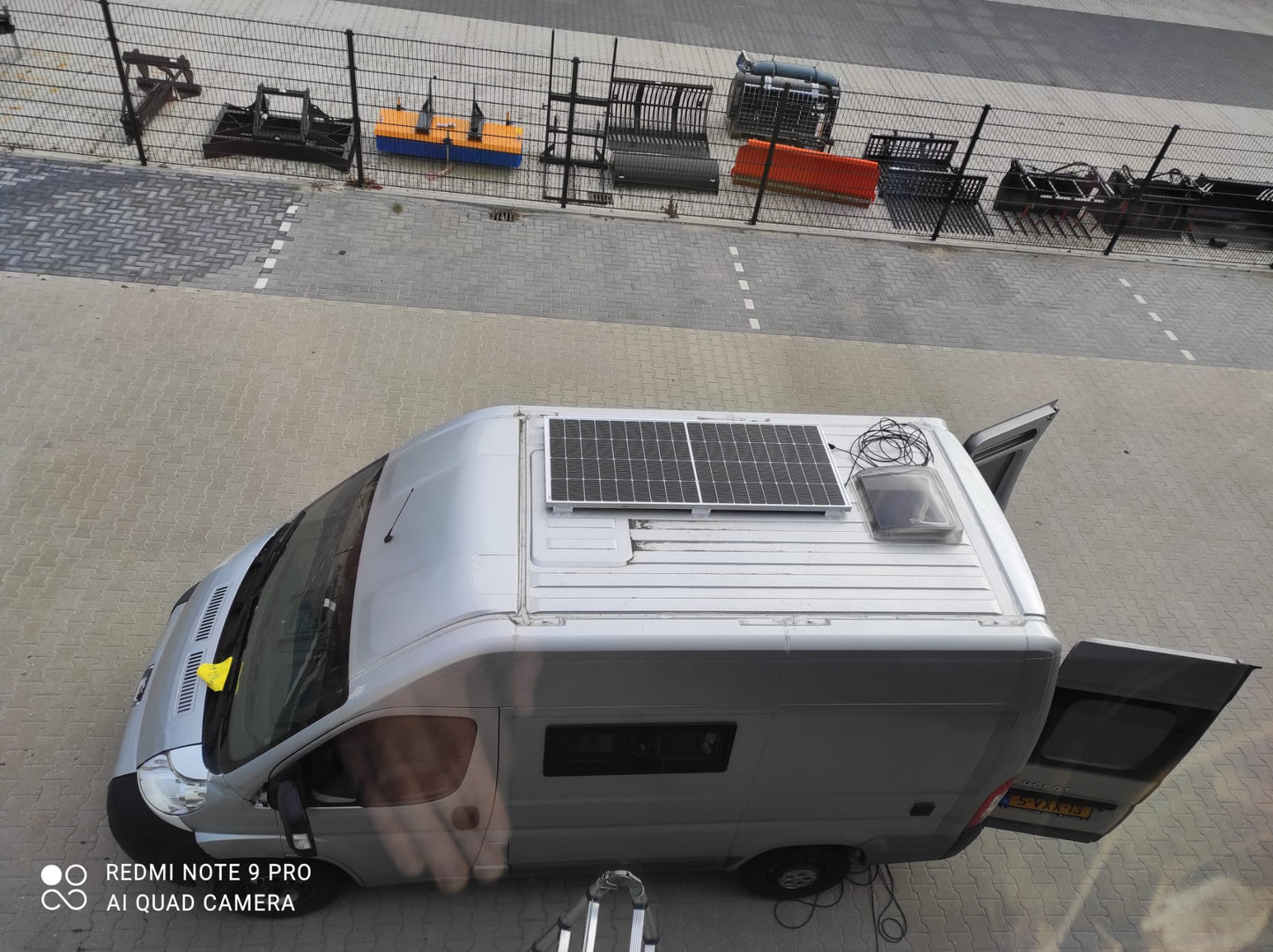
The Faraday Energy Glass PERC S3 is a robust 225Wp glass solar panel for motorhomes (and also boats), with modern monocrystalline PERC cells. Customers choose this panel mainly when they want to upgrade an existing motorhome with reliable solar energy without the hassle of installation.
Tip: most questions are not about the panel, but about “what else do I need?” That is clearly explained below.
What can you expect from solar panels on a motorhome?
- You charge your leisure battery whenever there is sun, so you can stay off-grid longer.
- The yield depends on solar radiation, the season and the battery state of charge.
- When the battery is mostly full, the charge controller automatically reduces the charging current. This is normal behavior.
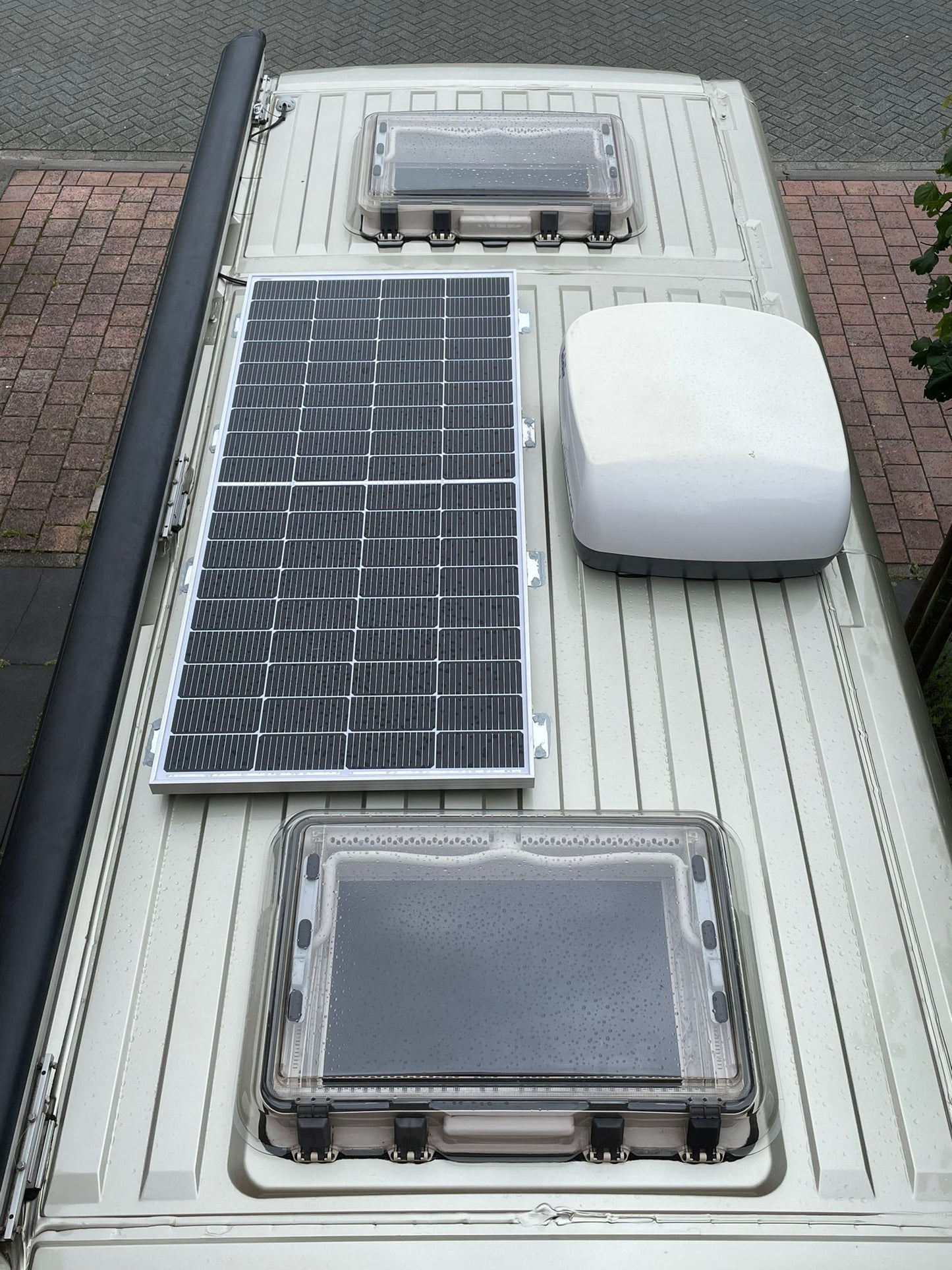
On motorhomes, solar panels are usually mounted flat on the roof. The yield therefore mainly depends on sun strength, the season and the battery status.
Why this 225Wp panel?
Practical choice for many motorhomes
- 225Wp is a great “first step” for many existing motorhomes: noticeably more charging without immediately needing a completely new system.
- Pairs well with a compact MPPT such as the 100/20 (see set below).
Modern cell technology (PERC + 13 busbars)
- Monocrystalline PERC cells with high efficiency (up to 22.9%).
- 13 busbars per cell for efficient current distribution.
Robust for motorhome use
- Sturdy aluminum frame and tempered glass.
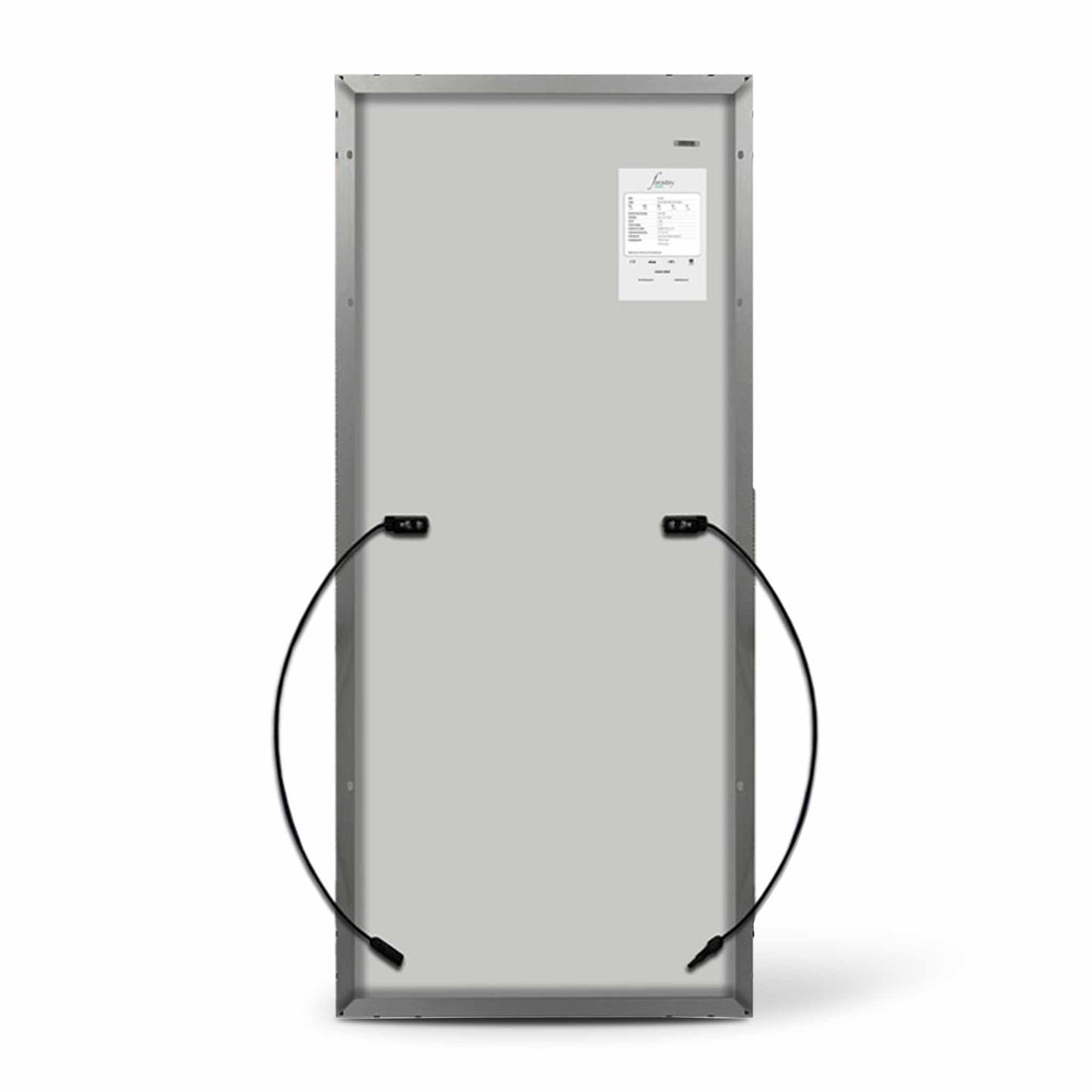
- Weather-resistant junction box with bypass diodes (for partial shade).
- UV- and weather-resistant cables with MC4 connectors (cable length 80 cm).
Highlighted: 2 “islands” (parallel) – noticeably better in partial shade
This Faraday panel is made up of two parallel-connected sections (“islands”). This means that one part of the panel continues to perform better when the other part is (partially) in the shade — a situation that often occurs when camping (skylight, lamppost, tree branches).
- Practical advantage: less “collapse” in yield when one part of the panel is shaded.
- Extra relevant for motorhomes: shade is almost never “all or nothing,” but often local.
Shade is and always will be detrimental; this design is especially helpful with partial shade.
Warranty
- 5-year manufacturer's warranty.
- 10-year power warranty > 90%.
What else do you need? (complete set in 5 steps)
For 1× 225Wp on an existing motorhome, you usually need the following:
1) Charge controller (MPPT)
- Faraday SmartSolar MPPT 100/20 — smart choice, good value for money.
- Victron SmartSolar MPPT 100/20 — Victron ecosystem, VictronConnect app.
For one 225Wp panel, a 100/20 is a logical match for many 12V motorhomes. Want to expand with extra panels later? Send us your plans, and we can make sure you don't have to buy again later.
2) Solar cable set (panel → MPPT)
6mm² is relatively thick: less voltage drop and often the safer choice for longer cable runs.
3) Battery cable set + fuse (MPPT → leisure battery)
- 6mm² battery cable set 2 × 1m + 25A fuse (fuse on the battery side)
This is the “installation wire” to connect the charge controller neatly and safely to the service/leisure battery.
4) Roof cable entry (cables going inside)
- White plastic double roof cable entry (most popular choice)
- Other options: all cable entries
5) Cable management on the roof
Want us to take a look at exactly what you need? Send us a photo of your current installation + battery type + where you want to place the MPPT.
Installation: which mounting method is right for your motorhome roof?
Ribbed roofs (roof with ribs/grooves): usually Z-profiles
- Aluminum Z-profiles (set of 6) — simple, strong and practical for ribbed roofs.
Flat roofs (semi-/integral): corner brackets or spoilers
Sealant & primers
For plastic corner brackets/spoilers, we recommend construction sealant + the corresponding primers. There are often two primers: one for metal (roof) and one for plastic (mounting).
- View our range: glue, primer and sealant
If in doubt: combine with mechanical mounting (screws) and seal neatly with sealant.
Specifications
- Max. power (Pmax): 225 Wp
- Max. voltage (Vmax): 19.8 V
- Max. current (Imax): 11.4 A
- Open circuit voltage (Voc): 23.5 V
- Short circuit current (Isc): 12.5 A
- Dimensions (l × w × d): 1595 × 705 × 35 mm
- Weight: 14 kg
Quality assurance: tested according to CE, TUV, RoHS standards + unique serial number for warranty protection.
Frequently asked questions
Does this 225Wp panel fit an MPPT 100/20?
In many 12V motorhomes, that is a good combination. The main difference is often in your expansion plan: if you want to add extra panels later, it is smart to take that into account now when making your choice.
I want to install 2 panels: series or parallel? (and 12V/24V)
For these Faraday panels, we usually recommend parallel connection for two panels (not in series). This pairs well with 12V systems and makes use of the advantage of the two “islands” in partial shade.
- 12V charging: 1–2 panels in parallel is often the most logical choice in practice.
- 24V battery charging: these panels are less ideal; in that case, preferably choose a panel type that is more focused on series configurations (one string/“island”).
- Important (safety): combine our 200Wp and 225Wp panels up to a maximum of 2 panels in parallel to stay within the maximum current of the MC4 connector.
Unsure about your situation (12V/24V, MPPT choice, expanding)? Send us your plan, and we will quickly check if everything remains electrically neat and safe.
Is 5 meters of solar cable enough?
In many motorhomes, yes, but this varies depending on the cable route (roof → cable entry → cabinet/garage/seat). If you are unsure: roughly measure the route or send us a photo/plan.
Why do you recommend 6mm² cable?
Thicker cable means less voltage drop and less heat at the same current. This is especially helpful for longer cable runs.
Deel